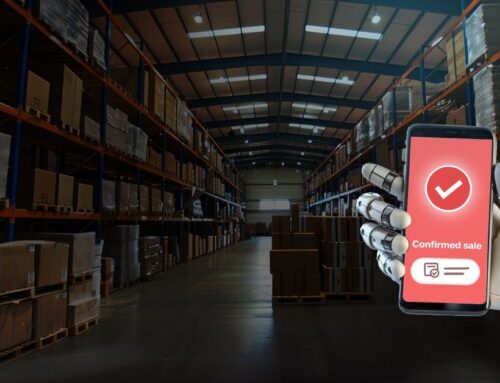
Most businesses assume profit problems come from low sales.
But in reality, many companies lose money because of inventory mistakes happening behind the scenes every single day.
Products get overstocked and sit for months. Fast-selling items suddenly run out. Manual tracking creates costly human errors. Inventory reports become outdated before decisions are even made. Over time, these issues quietly drain profits without businesses realizing how much money is being lost.
This is why inventory management is no longer just an operational task—it has become a strategic business priority.
According to IHL Group, inventory distortion caused by overstocks and out-of-stocks costs retailers globally over a trillion dollars annually.
For businesses in Puerto Rico, where supply chain efficiency and operational timing are critical, AI-driven inventory systems are quickly becoming a competitive advantage.
What Are AI Inventory Management Agents and How Do They Work?
Understanding How AI Agents Transform Inventory Operations
AI inventory agents are intelligent systems designed to monitor, analyze, and optimize inventory processes automatically.
Unlike traditional inventory software that only stores information, AI agents actively interpret data and make recommendations in real time. They learn from sales trends, customer behavior, seasonal demand, and stock movement patterns to improve decision-making continuously.
This means businesses no longer rely solely on manual forecasting or outdated spreadsheets. Instead, they gain a system capable of predicting demand, detecting risks, and improving efficiency automatically.
The biggest advantage is adaptability. AI systems evolve as business conditions change, making them far more responsive than static inventory tools.
Common Inventory Management Problems Businesses Face
Why Traditional Inventory Systems Often Fail
Many inventory problems are caused by outdated management methods.
Manual tracking creates inconsistencies because employees enter data differently or forget updates entirely. This leads to inaccurate stock levels and poor purchasing decisions.
Another major issue is lack of visibility. Businesses often do not know what inventory is moving efficiently and what inventory is sitting unused. Without real-time insights, decisions become reactive instead of proactive.
Overstocking is another costly challenge. Excess inventory ties up cash flow, increases storage costs, and raises the risk of product waste. At the same time, understocking leads to missed sales opportunities and frustrated customers.
Traditional systems struggle because they are designed to record inventory—not optimize it.
How AI Agents Reduce Inventory Errors and Improve Accuracy
Using AI for Real-Time Inventory Tracking and Precision
AI dramatically improves inventory accuracy by reducing dependence on manual processes.
Through real-time tracking, AI systems continuously update inventory data as products move through your business.
AI agents can also integrate with barcode systems, POS platforms, warehouse sensors, and supply chain tools. This creates a connected ecosystem where inventory data flows automatically across departments.
The result is greater operational precision. Businesses gain confidence in their numbers, reduce costly discrepancies, and improve decision-making speed.
Companies working with Dedicated Software Developers in Puerto Rico often prioritize these integrations because customized AI systems provide significantly better operational control than generic solutions.
How AI Predicts Demand and Optimizes Inventory Levels
Preventing Overstocking and Stock Shortages With Predictive Intelligence
One of the most valuable capabilities of AI is predictive forecasting.
Instead of reacting to inventory problems after they happen, AI analyzes historical data, customer buying patterns, and seasonal trends to anticipate future demand.
This helps businesses maintain optimal stock levels. Fast-moving products remain available, while excess inventory is reduced. Businesses no longer need to rely on guesswork when making purchasing decisions.
McKinsey reports that AI-powered supply chain management can significantly improve forecasting accuracy and operational efficiency.
For businesses in Puerto Rico, where tourism and seasonal demand fluctuations can shift rapidly, predictive inventory management creates a major advantage.
Read More : How LABAAPs knowledge of AI Agents can 10X your business
How Better Inventory Control Directly Increases Profitability
Why Inventory Efficiency Protects Your Bottom Line
Inventory control is directly connected to profitability.
When businesses reduce overstocking, they free up cash flow that would otherwise remain tied to unused inventory. This improves financial flexibility and operational efficiency.
AI also reduces waste by identifying slow-moving products before they become dead stock. This minimizes unnecessary losses and improves turnover rates.
At the same time, preventing stock shortages ensures that revenue opportunities are not missed. Customers are more likely to trust businesses that consistently have products available when needed.
Ultimately, smarter inventory systems lead to stronger margins and healthier business performance.
How AI Improves Warehouse and Stockroom Operations
Creating Faster and More Efficient Inventory Workflows
Warehouses and storage facilities become significantly more efficient with AI automation.
AI systems can track inventory movement in real time, optimize storage placement, and generate instant alerts when stock levels change. This reduces delays and improves operational flow.
Instead of employees manually searching for products or updating spreadsheets, AI-driven systems streamline the process automatically. This saves time and reduces labor inefficiencies.
Many artificial intelligence software companies are focusing heavily on warehouse automation because operational efficiency has become one of the most valuable competitive advantages in modern business.
Can AI Help Prevent Inventory Loss and Theft?
Detecting Inventory Shrinkage Before It Becomes Expensive
Inventory shrinkage is one of the most overlooked threats to profitability.
AI agents can identify unusual inventory patterns, suspicious stock movements, and inconsistencies that may indicate theft, fraud, or operational mistakes.
Because AI systems monitor inventory continuously, they can detect problems earlier than traditional systems. Businesses receive alerts before losses become significant.
This proactive monitoring helps protect both inventory and profits while improving accountability across operations.
How AI Gives Businesses Better Inventory Visibility
Real-Time Insights That Improve Decision-Making
One of the biggest advantages of AI inventory systems is visibility.
Business owners and managers gain access to real-time dashboards showing stock levels, movement trends, and operational performance instantly. This allows for faster and more informed decisions.
Multi-location businesses benefit even more because AI centralizes inventory data across all locations. Instead of disconnected systems, businesses operate with one unified view.
This level of transparency improves coordination, forecasting, and overall efficiency.
Which Businesses Benefit Most From AI Inventory Management?
Real-World Applications Across Industries
AI inventory systems are valuable across multiple industries.
Retail businesses use AI to optimize stock levels and reduce lost sales opportunities. Restaurants rely on AI to manage food inventory and reduce spoilage.
E-commerce companies use AI to forecast demand and streamline fulfillment operations, while warehouses and distributors use it to improve logistics and reduce operational delays.
Manufacturing businesses also benefit by improving supply chain coordination and minimizing production interruptions.
The flexibility of AI makes it relevant for businesses of all sizes.
Why Puerto Rico Businesses Need Smarter Inventory Systems
The Growing Importance of Inventory Optimization
Puerto Rico businesses face unique operational challenges.
Supply chain disruptions, fluctuating tourism demand, and rising competition make inventory efficiency more important than ever. Businesses that cannot respond quickly often experience delays, shortages, or unnecessary waste.
AI inventory systems help businesses become more agile. Real-time monitoring and predictive analytics allow companies to adjust faster to changing market conditions.
This adaptability creates resilience and improves long-term profitability.
Is AI Inventory Management Expensive or Difficult?
Breaking the Biggest Misconceptions About AI
Many businesses assume AI systems are too expensive or complicated to implement.
In reality, modern AI solutions are scalable and can be introduced gradually. Businesses do not need to automate everything at once to see results.
Another common misconception is that automation replaces employees. In practice, AI enhances productivity by removing repetitive tasks, allowing teams to focus on higher-value work.
The goal of AI is not to replace human intelligence—it is to strengthen operational efficiency.
How LABAAP Uses AI to Improve Inventory Control
A Business-First Approach to Intelligent Automation
At LABAAP, AI implementation focuses on solving real operational challenges—not just introducing technology for the sake of innovation.
The process begins by understanding your workflows, inventory structure, and business goals. From there, customized AI systems are designed to integrate with existing operations seamlessly.
This strategic approach ensures that automation improves efficiency without disrupting your business processes. Scalability and long-term optimization remain central to every solution.
Conclusion
Why Smarter Inventory Systems Lead to Stronger Profits
Inventory control is no longer just about counting products—it’s about protecting profitability, improving efficiency, and creating scalability.
AI agents help businesses reduce waste, improve forecasting, strengthen operational visibility, and prevent costly inventory mistakes. Over time, these improvements compound into stronger financial performance.
Businesses that adopt intelligent inventory systems early position themselves for long-term growth and operational stability.
For companies looking to combine strategic technology with operational efficiency, working with the best software developers in puerto rico ensures that AI solutions are built to support both profitability and future expansion.
At LABAAP, the goal is not just to automate inventory management—but to help businesses operate smarter, faster, and more profitably in an increasingly competitive market.
Because the businesses that control inventory intelligently don’t just protect products—
they protect growth itself.
Israel Romero – The Principal Pioneer Behind LABAAP
Your online reputation is one of your most valuable digital assets. It influences how customers perceive your brand, how search engines rank your business, and how effectively you convert leads into clients. Managing reputation is not about reacting—it’s about being proactive. It requires strategy, consistency, and the right tools to ensure your brand is represented accurately.
For businesses aiming to build long-term trust and visibility, working with the best software developers in puerto rico ensures that both technology and strategy support your reputation effectively.
At LABAAP, the focus is not just on managing what people see—but on building a reputation that truly reflects your value.
Because in today’s world, people don’t just choose the best option— they choose the most trusted one.
Professionals interested in exploring collaboration or growth opportunities can connect with him at cmo@labaap.com.